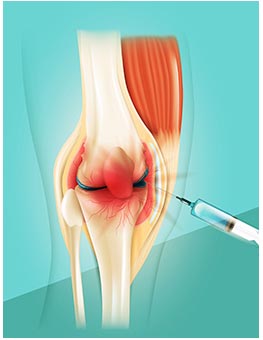
Pain treatments
Myofascial infiltrations and dry needling
Myofascial infiltrations and dry needling are different techniques that may both be assessed for some forms of muscular and myofascial pain.

Myofascial infiltrations
Myofascial infiltrations consist of small subdermal and intramuscular injections directly into the painful area, to treat musculoskeletal syndromes.
Pain may arise from excessive release of inflammatory substances and functional abnormalities of muscle fibres: infiltrations are used to deactivate these areas.
Dry needling
Dry needling, or dry puncture, uses very thin needles in myofascial tissue to treat muscular pain, reduced movement and contractures.
Unlike infiltrations, it does not inject substances: it is completely free from possible drug-related side effects and can also be performed in cases of allergies or intolerances. A suitably manipulated needle acts on the localised contracture and improves mobility and pain.
When they may be used
The main indication for both techniques is myofascial syndrome, which may present with continuous muscle pain, contractures, functional limitations or tingling.
Trigger Points can be identified during the consultation by palpation or gentle pressure.
- Tension-type headaches, migraine and neuralgias.
- Low back pain, neck pain and hip pain.
- Fibromyalgia syndrome and cervical osteoarthritis.
- Sacroiliac pain, shoulder periarthritis and nocturnal cramps.
Choosing the technique and substances
For infiltrations, I use lidocaine most often, at very low concentrations and volumes, because of its safety and efficacy.
Dry needling does not use medicines. The choice of one technique or a combination depends on medical history and overall assessment.
Precautions and possible effects
Lidocaine allergy is an absolute contraindication to myofascial infiltrations; in some cases dry needling may be assessed.
Some heart conditions, infection of the area, clotting disorders and blood diseases may contraindicate one or both techniques.
- Infiltrations may be slightly painful, and the medication may cause burning for a few seconds.
- Dry needling is not painful, although it may cause slight discomfort that disappears after a few seconds.
- Small bruises may occur after treatment and disappear within a couple of days.
Clinical area
Pain Medicine
Myofascial techniques are assessed within a consultation and a pathway for pain.
Learn more about Pain MedicineAlso learn more about: Pain-relief Mesotherapy: local treatment for pain
Related treatments
Other infiltrative techniques may be considered when appropriate.
Frequently asked questions
Practical information about both techniques.
Infiltration involves injecting substances; dry needling uses a thin needle without injecting medication.
The choice of one technique or a combination depends on medical history and overall assessment.
Continuous muscle pain, contractures, functional limitation, tingling and Trigger Points may all be assessed.
Local infections, clotting disorders, blood diseases and some cardiac conditions may mean that treatment should not be carried out.
Further reading
Related articles

Fibromyalgia: Causes, Symptoms and the Most Effective Treatments!
An in-depth look at what science and modern medicine know today
Read the article
What is Pain Therapy and the benefits for your health
A multidisciplinary practice to fight pain of various origins
Read the articleWould you like to understand which technique is appropriate?
A consultation distinguishes the techniques and assesses the most appropriate pathway.