
Pain treatments
Joint infiltrations
Joint and peri-articular infiltrations are a local technique I assess within a pathway for joint pain.
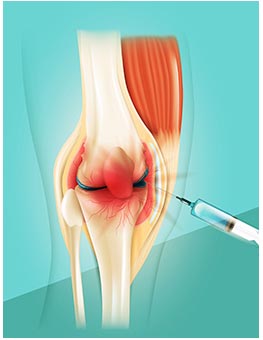
What joint infiltrations are
Intra-articular and peri-articular infiltrations involve introducing a medication directly into the joint or surrounding tissue.
The preparation may be injected into the joint or, in specific circumstances, into peri-articular tissue, both to relieve pain and to treat its cause, such as inflammation or tissue degeneration.
Which substances may be used
Medications may include anti-inflammatory drugs, such as corticosteroids, and painkillers, such as local anaesthetics.
- Hyaluronic acid, a component of synovial fluid that reduces friction between the ends of bones.
- Collagen, a natural component of ligaments, tendons, capsules, bones, cartilage and muscles.
When they are considered
Infiltrations may be particularly indicated for pain affecting the knee, shoulder, elbow, hip, wrist, ankle and small joints of the hands and feet.
Pain may have inflammatory causes after trauma, be linked to overstimulation of the joint, or to osteoarticular conditions such as osteoarthritis, arthritis or cartilage wear.
Before and after treatment
No specific preparation is required, although blood tests to assess clotting may be useful to prevent bruising after the procedure.
If you take anticoagulants, you may be asked to stop them: always bring a list of your medications and report any clotting disorders.
After the infiltration, the joint should rest for at least twenty-four hours and ice can be applied with a cloth protecting the skin.
Contraindications and possible effects
In some cases infiltrations cannot be performed because they may not be safe for your health.
- Joint or peri-articular infection.
- Blood in the joint.
- Inability to stop anticoagulant therapy because of cardiac or clotting conditions.
- Pain, swelling, redness or warmth in the treated joint: side effects are few and mostly temporary.
Within a pain medicine pathway
In severe joint osteoarthritis, infiltrations can certainly improve pain and inflammation, delaying possible surgery.
I assess each case carefully to guide you towards the most appropriate pathway for your health.
Clinical area
Pain Medicine
Infiltrations are one of the tools I may assess within a medical pathway for pain.
Learn more about Pain MedicineAlso learn more about: Pain-relief Mesotherapy: local treatment for pain
Related treatments
When appropriate, other infiltrative treatments can be assessed after your consultation.
Frequently asked questions
Practical information about joint infiltrations.
The degree of discomfort varies from person to person; the procedure is assessed and carried out with attention to the individual case.
No specific preparation is required, but clotting tests and current treatment may need to be assessed.
Always report medications you take: in some cases they may need to be stopped following medical advice.
The joint should rest for at least twenty-four hours and ice may be used while protecting the skin.
Further reading
Related articles

What is Pain Therapy and the benefits for your health
A multidisciplinary practice to fight pain of various origins
Read the article
Fibromyalgia: Causes, Symptoms and the Most Effective Treatments!
An in-depth look at what science and modern medicine know today
Read the articleWould you like to assess this treatment?
A consultation helps establish whether joint infiltrations are appropriate within your pathway.