What is the gut microbiome?
The gut microbiome includes the microorganisms that live in the gut and their genetic material. Gut microbiome is the microbial community within it: it includes mainly bacteria, as well as archaea, fungi and protozoa.
It is a rich, living ecosystem that changes over time and is influenced by food, medicines, habits, age and environment. Learning about it can add a useful perspective on your gut balance.
A personal balance that evolves over time
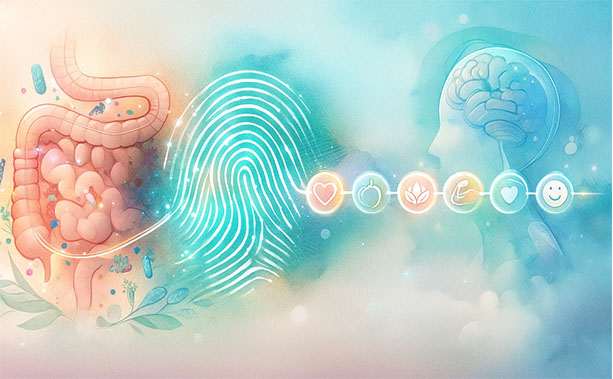
Gut microbiome composition can differ from one person to another. This is why the gut microbiome is often described as a kind of fingerprint of our gut balance.
Over time it can change in relation to food, medicines, sleep, daily activities and environment. This variability makes a reading that starts from the person and their aims especially valuable.
Why it can be useful to learn about it
Gut microbiome analysis can help explore several aspects of gut microbiome, including:
- the composition and biodiversity of the gut microbiome;
- the balance between different microbial groups and possible imbalances;
- the relative presence of bacteria, archaea, fungi and protozoa;
- the potential of certain metabolic and enzymatic activities of microorganisms.
This information can offer useful elements for personalising food choices and supplements. Metabolic and enzymatic potential is estimated from the analysis data and should be read alongside the rest of the personal profile.
When it can offer useful information
This exploration can be useful when you would like to understand more about:
- bloating, difficult digestion or changes in bowel habits;
- how to personalise food choices and supplements;
- fatigue or unrefreshing sleep;
- the relationships between microbiome, inflammation and lifestyle.
These experiences can have different causes: this is why the results become more useful when read alongside your history and individual characteristics.
From report to personalised guidance
A report becomes more valuable when it is connected to personal history, food choices, habits, medicines and the aims of the exploration. It is this broader reading that can lead to guidance that is genuinely suited to the individual.
Within Nutrimicrobiome, I study the report, relate it to your situation and prepare personalised nutritional guidance to discuss together during a dedicated appointment. When a clinical assessment is needed, the pathway can be integrated with the most appropriate consultation or investigations.
An additional perspective on your wellbeing
Learning more about the gut microbiome can offer an additional perspective on the relationship between the gut, food and wellbeing. The most important step is turning the information into clear guidance that suits the individual.